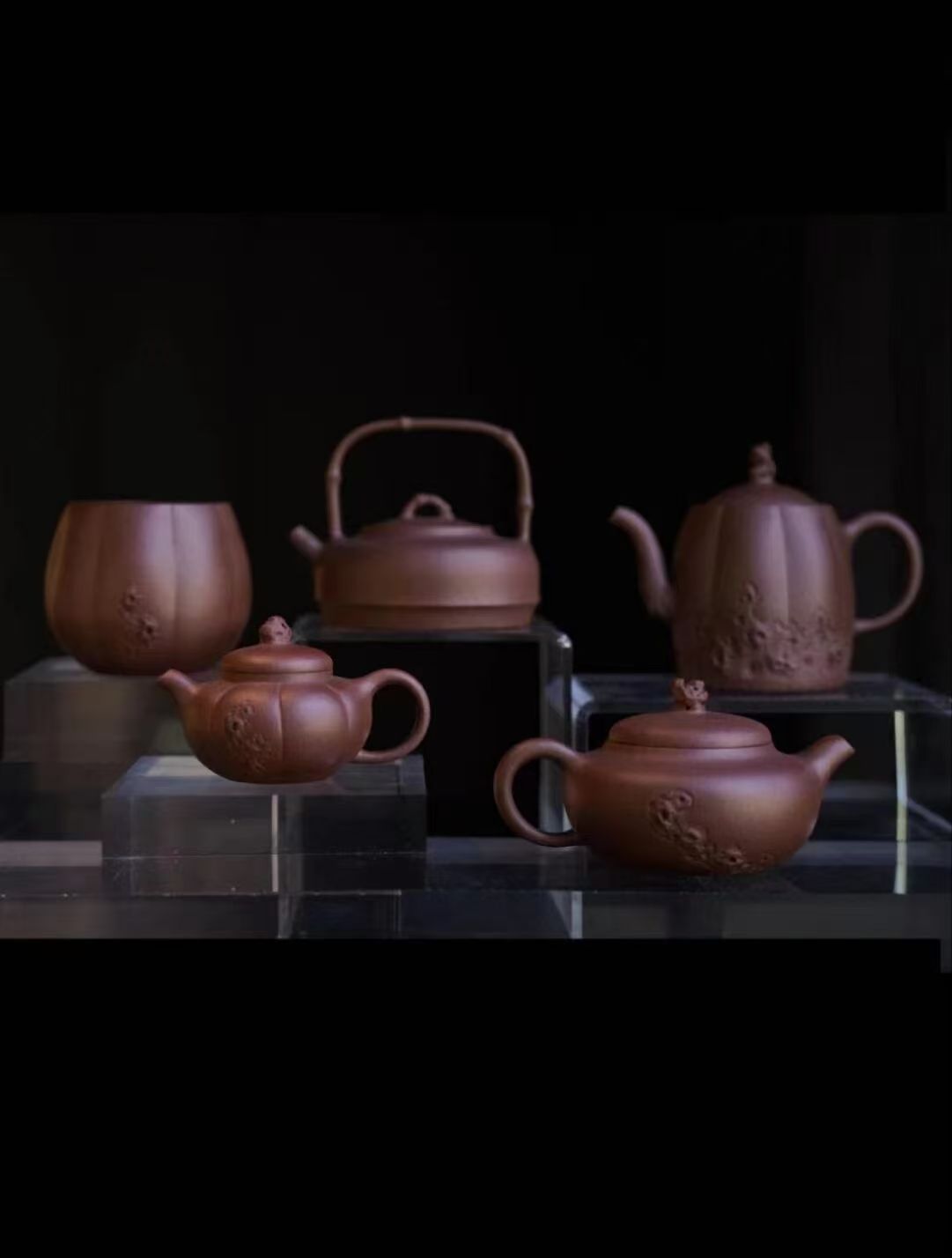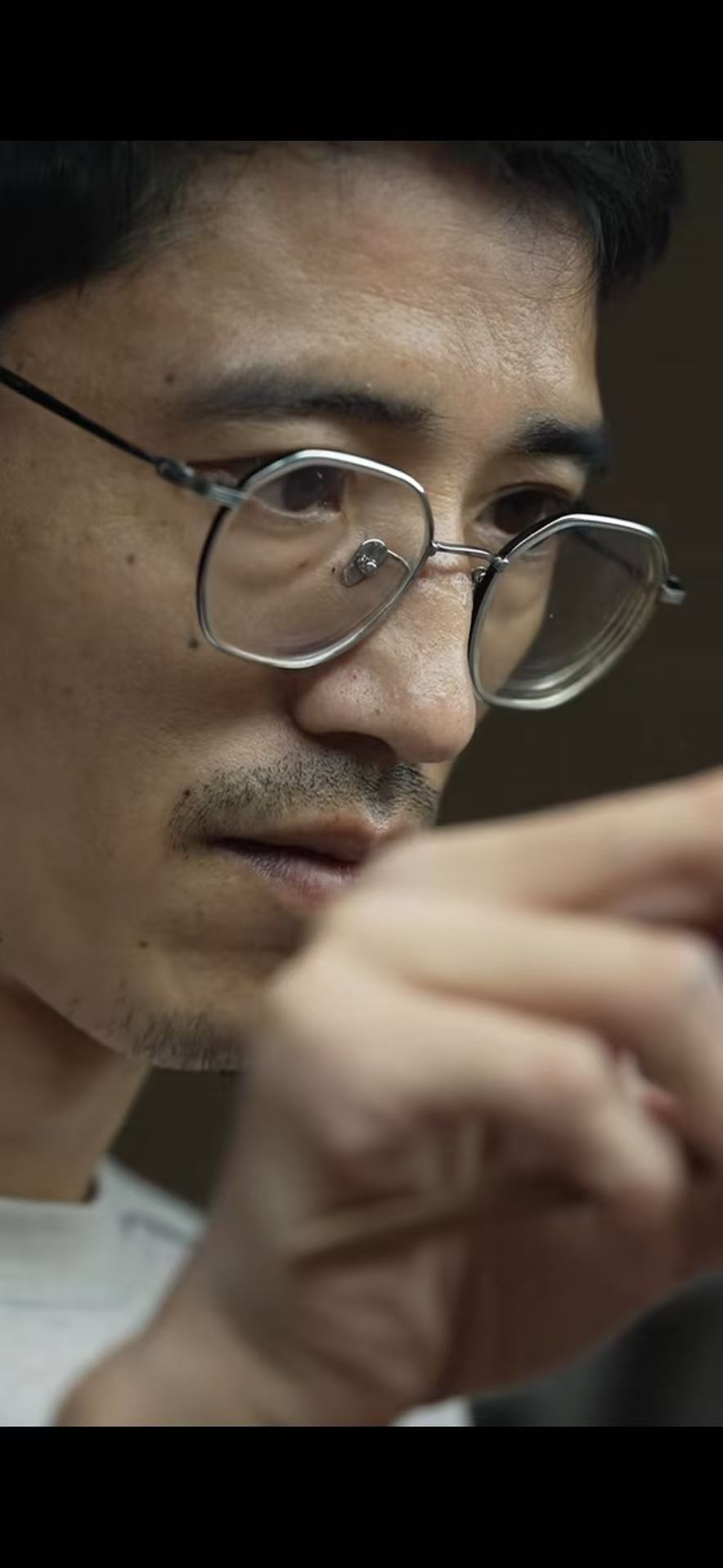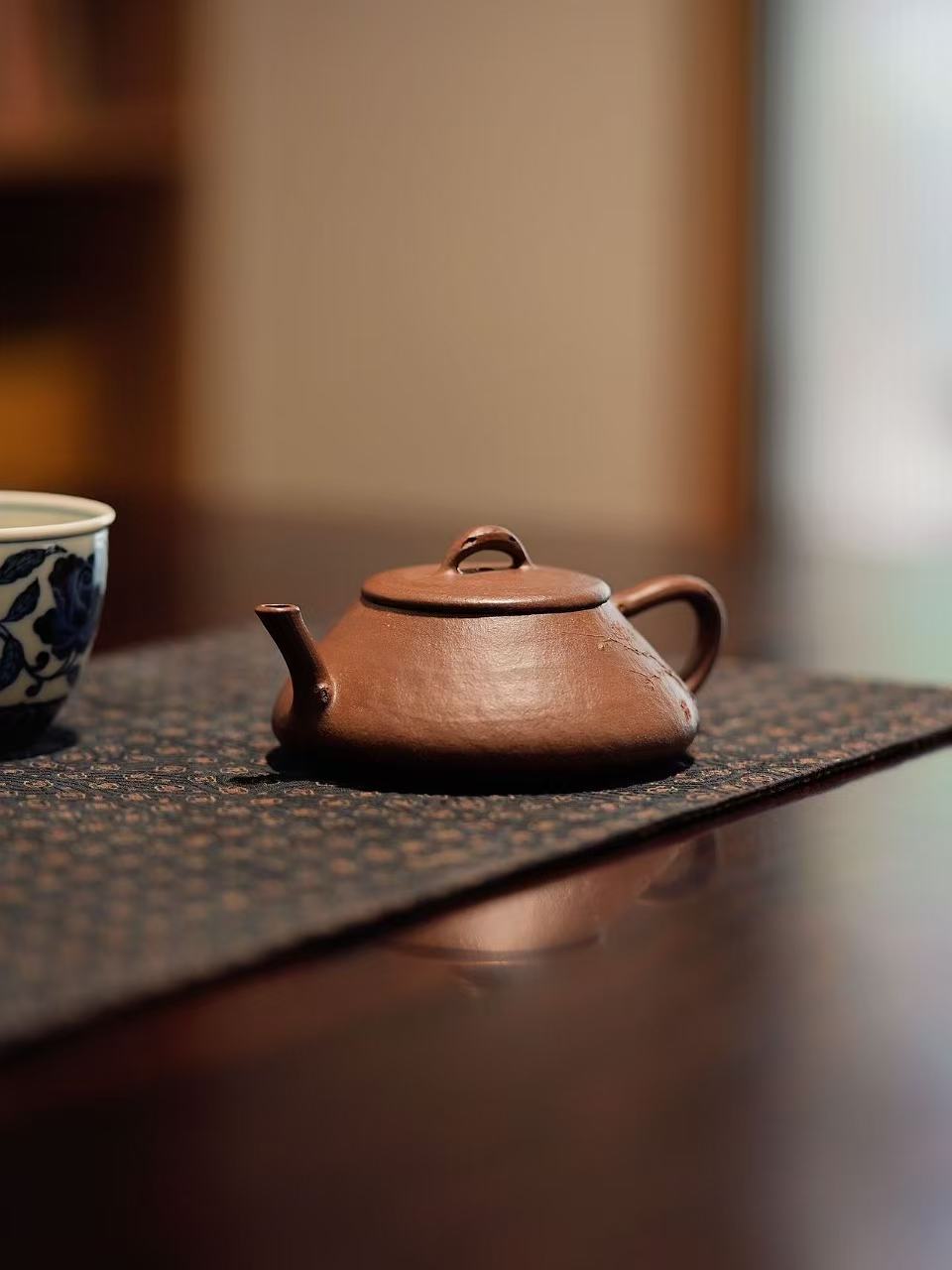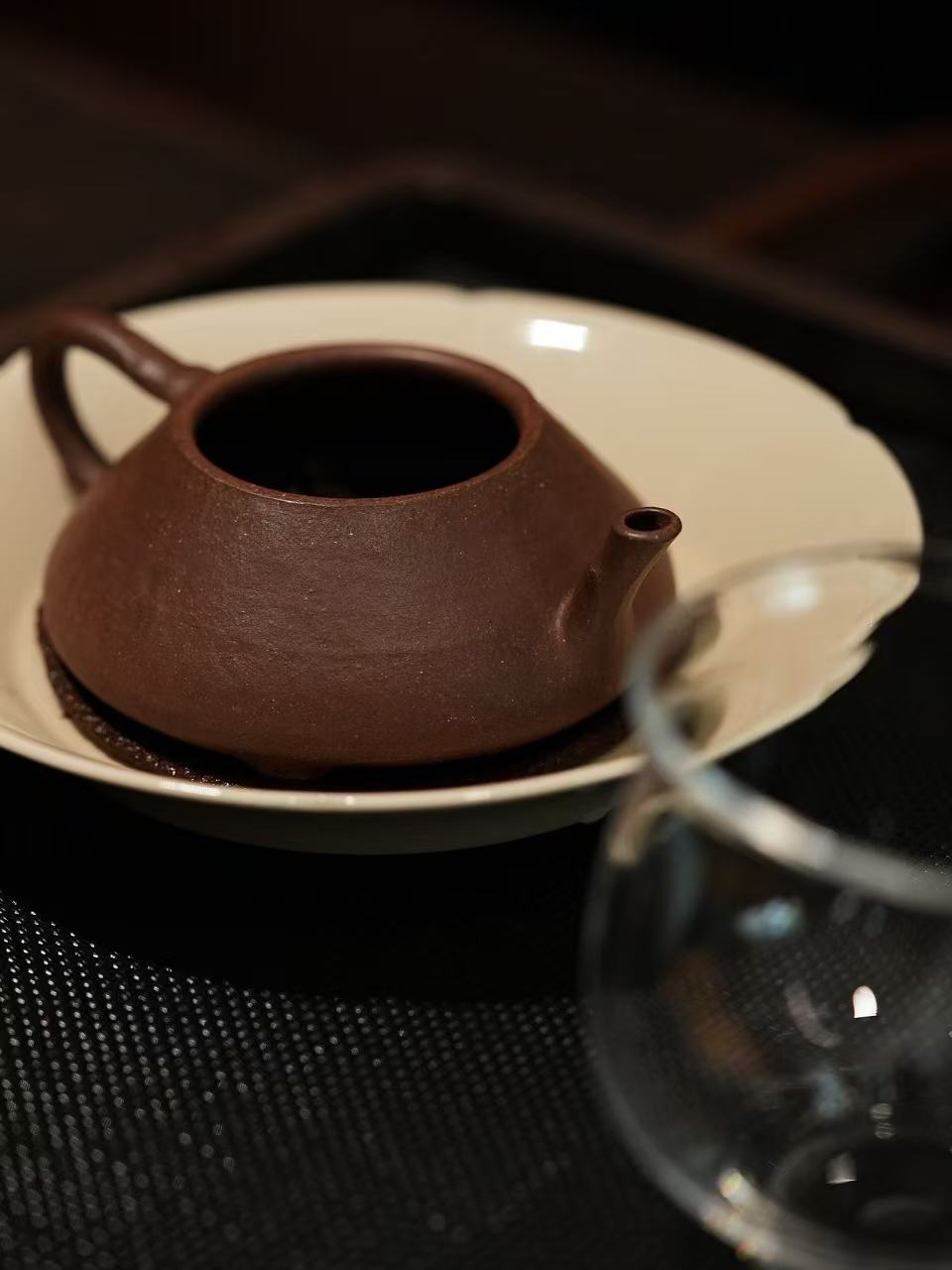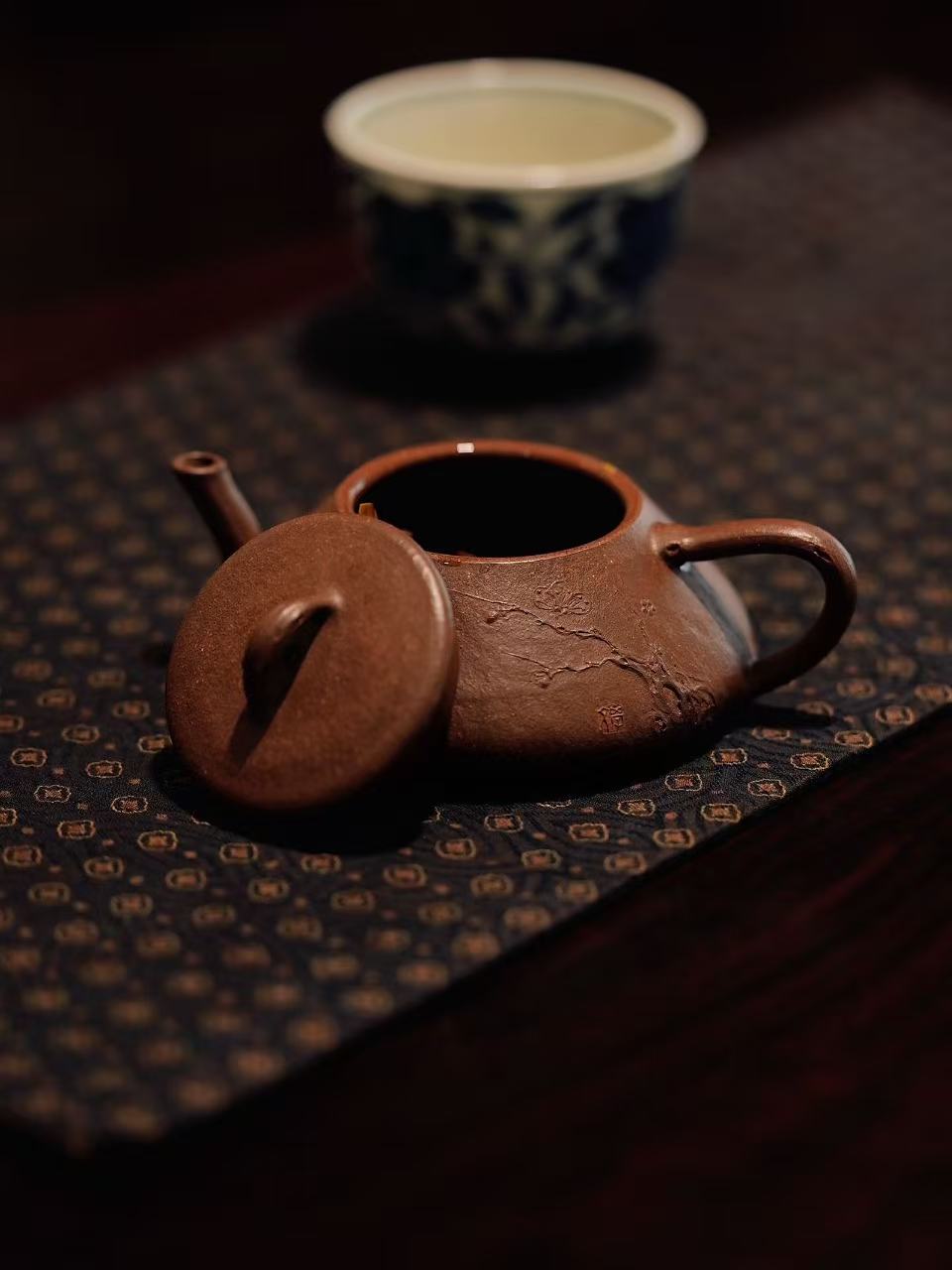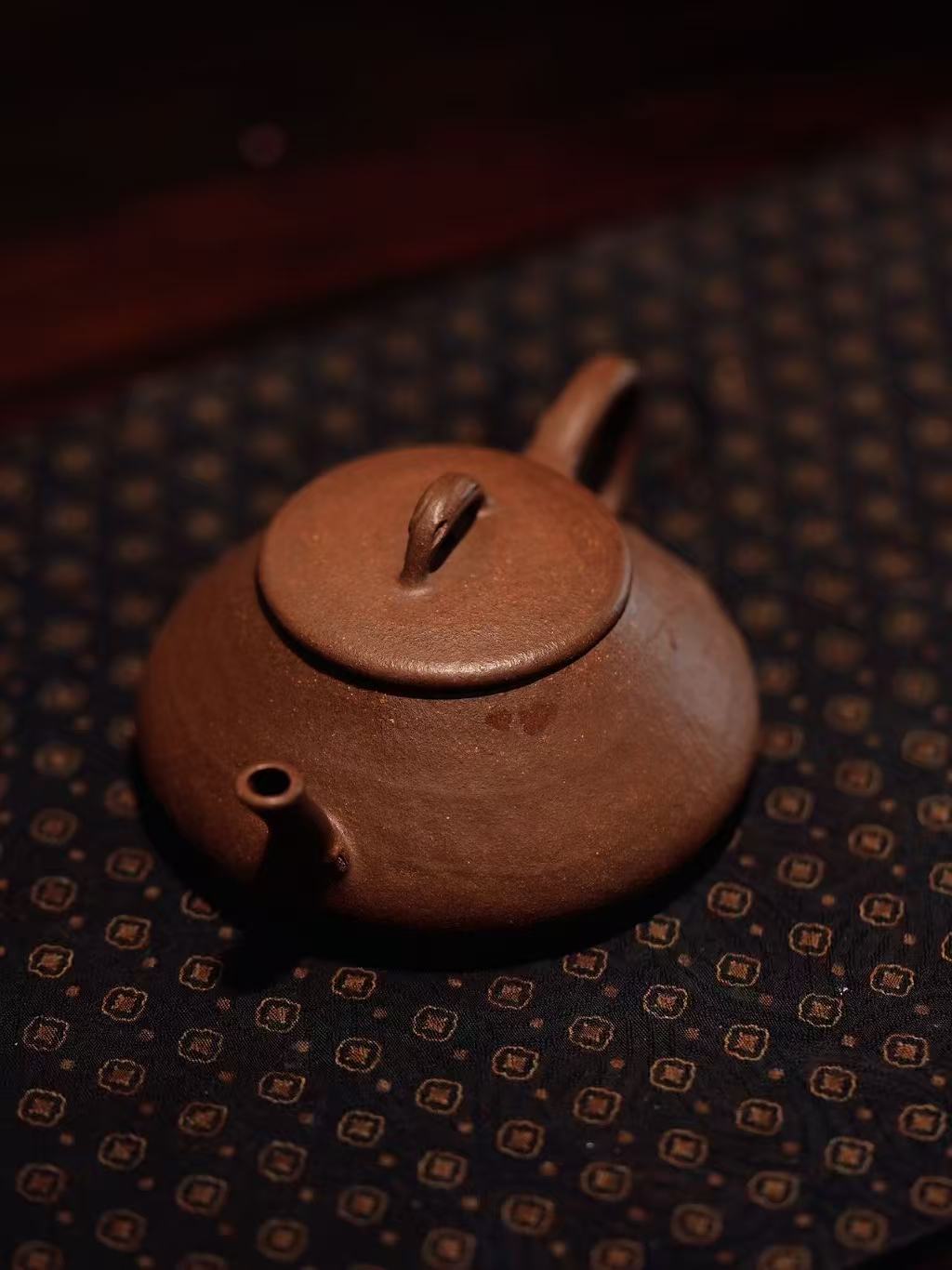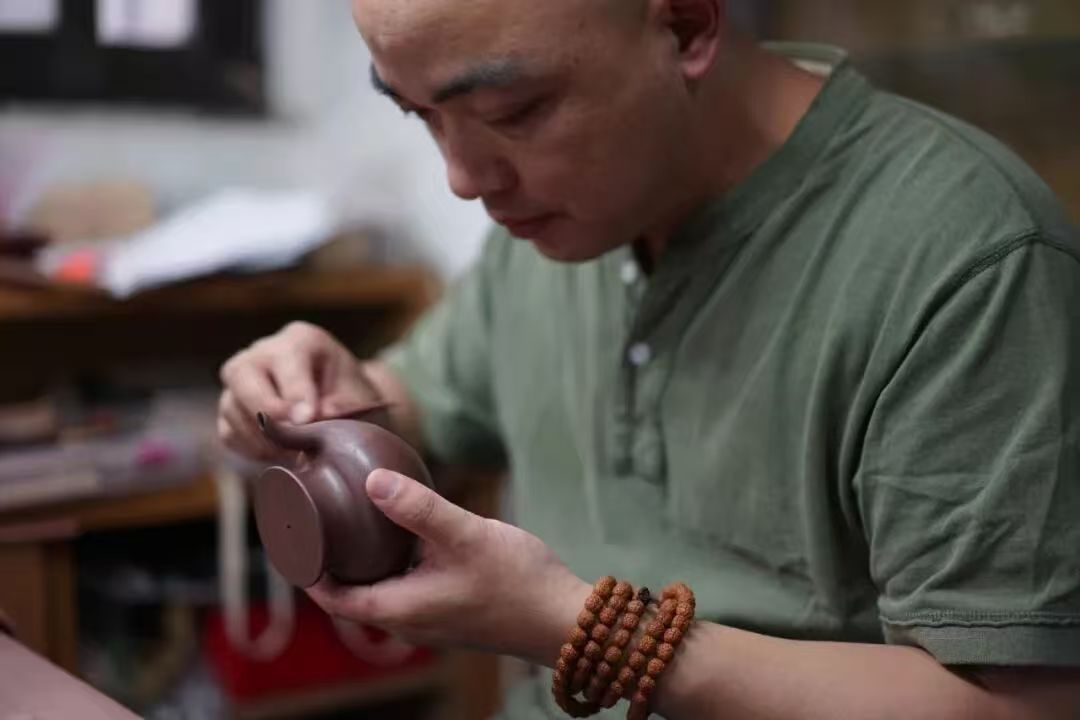
The heart of the studio is clay — and clay here means two men who could not work more differently. One refines the ornamental literati tradition to a jeweler's finish; the other strips it back to fire, ash, and the press of a thumb. Between them lies the whole range of what a Yixing pot can be.
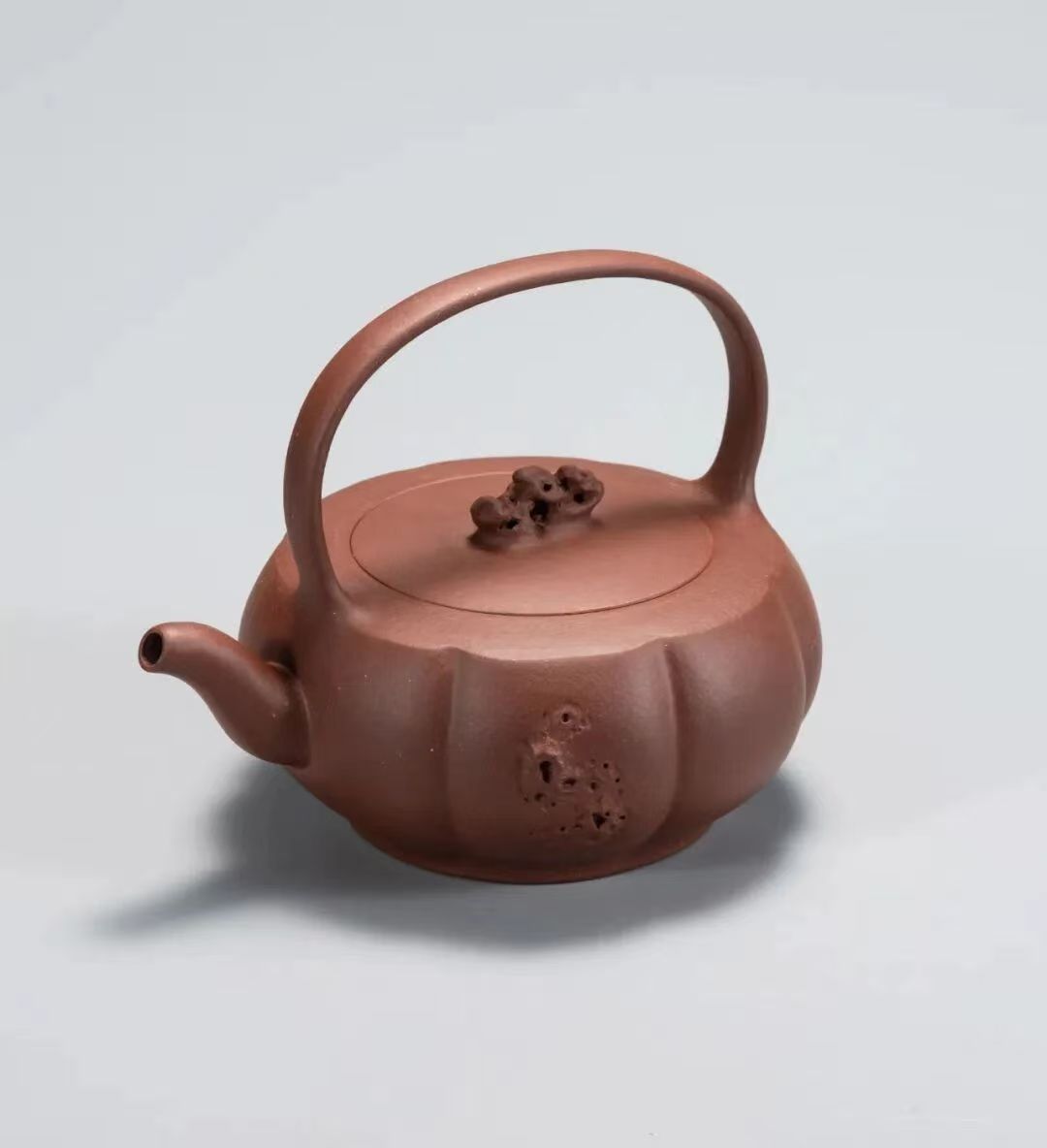
Xiang Feng works in the refined literati grammar of Yixing — 筋纹 (jīn wén), the ribbed melon form, pulled taut and exact. His documented piece, 玲珑提梁 (Línglóng Tíliáng), an openwork bridge-handle pot of 220cc, shows the full reach of his hand: a bridge handle arcing over the body, pierced 玲珑 (“exquisite”) openwork, and a lid knob shaped like a 太湖石 — the eroded scholar's rock prized on a literati's desk. It is decoration as devotion: every rib aligned, every hole cut clean.
The piece was shown in the 2021 紫韵天成 spring zisha exhibition in Taipei. We let the work speak, and the work is meticulous.
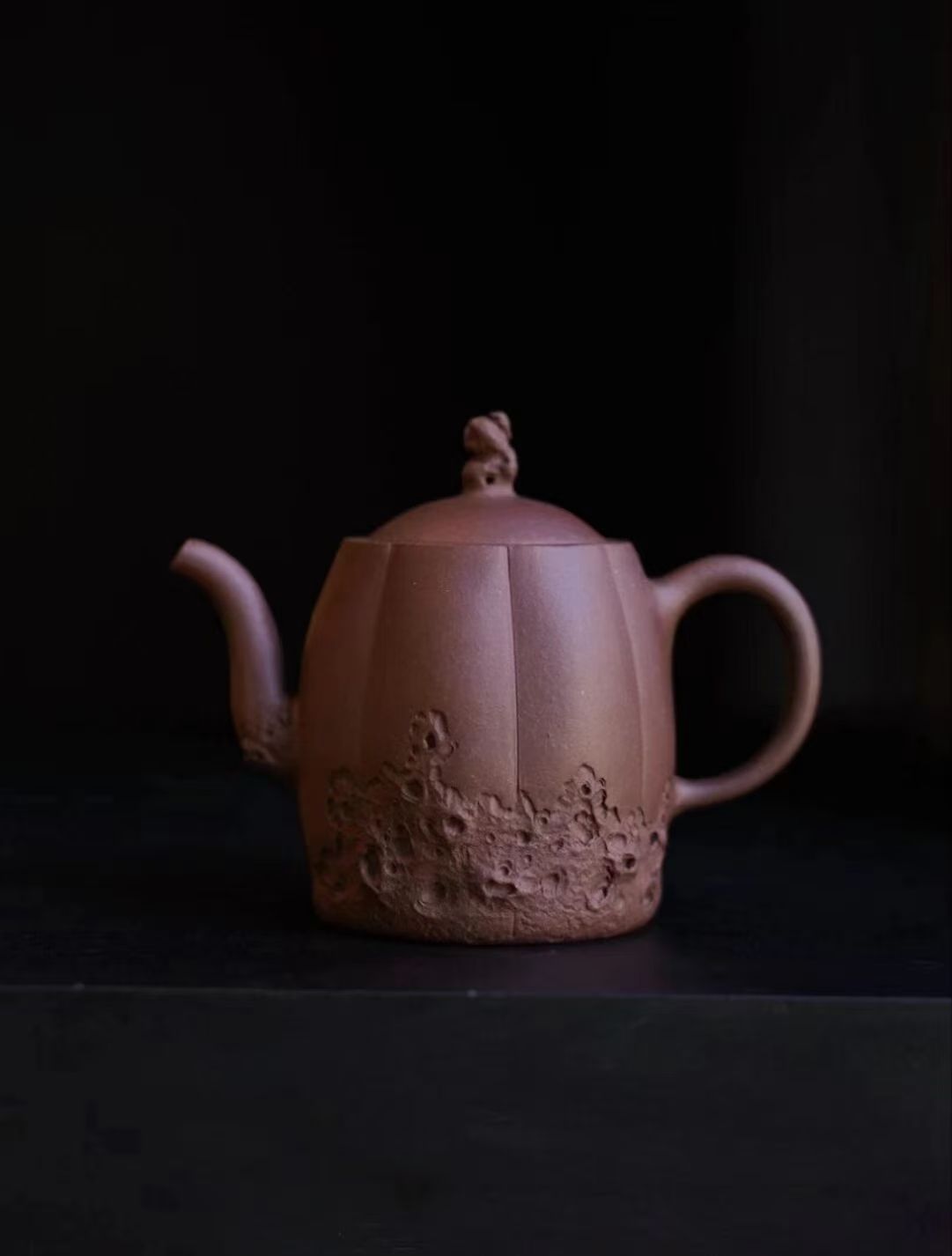


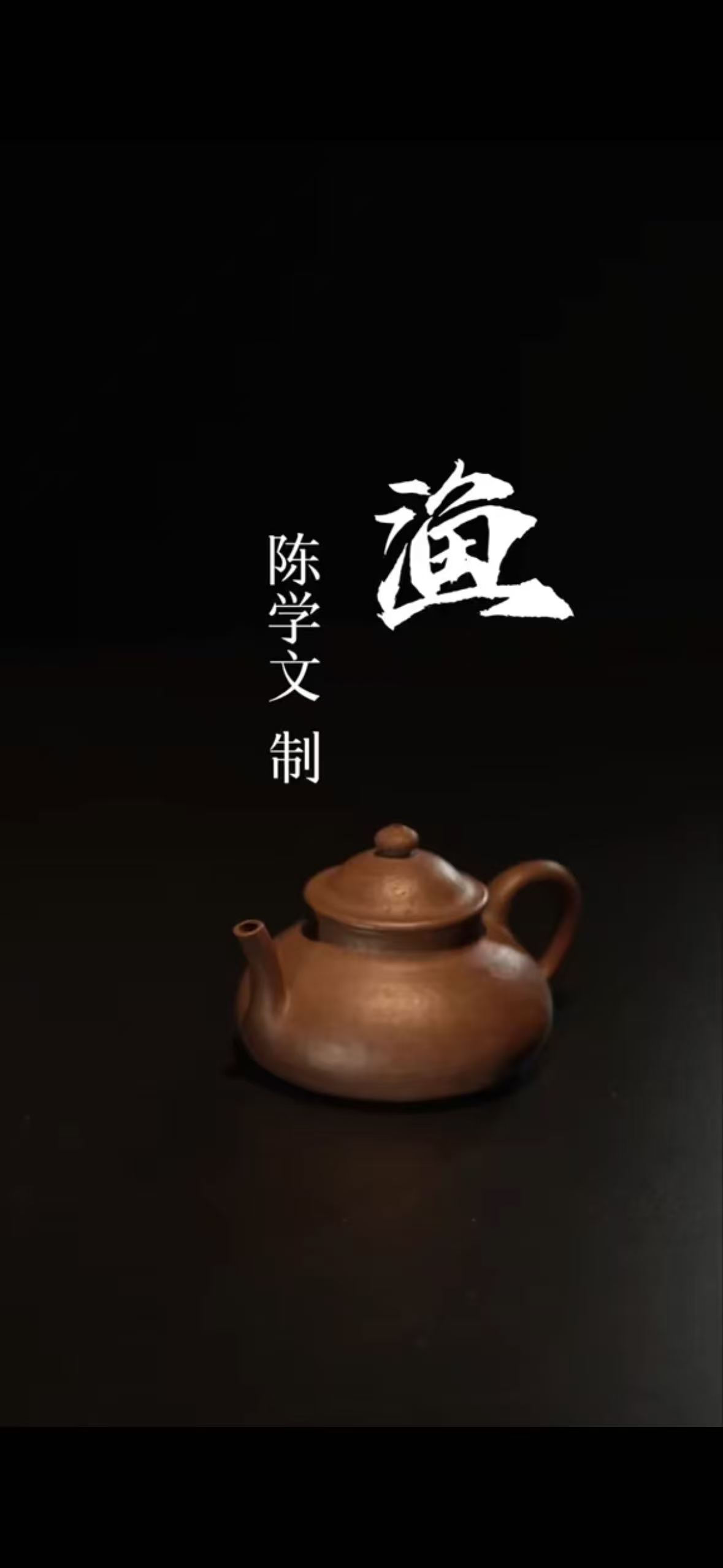
Chen Xuewen builds the way the first potters did, before the wheel and before Yixing's famous paddle: 盘筑 (pán zhù), coil by coil, the wall raised and pinched by hand. Then 柴烧 (chái shāo), the wood kiln, where flame and falling ash write across 紫泥 (zǐ ní, purple clay) in gradients no glaze could plan — amber bleeding into deep violet where the fire lingered.
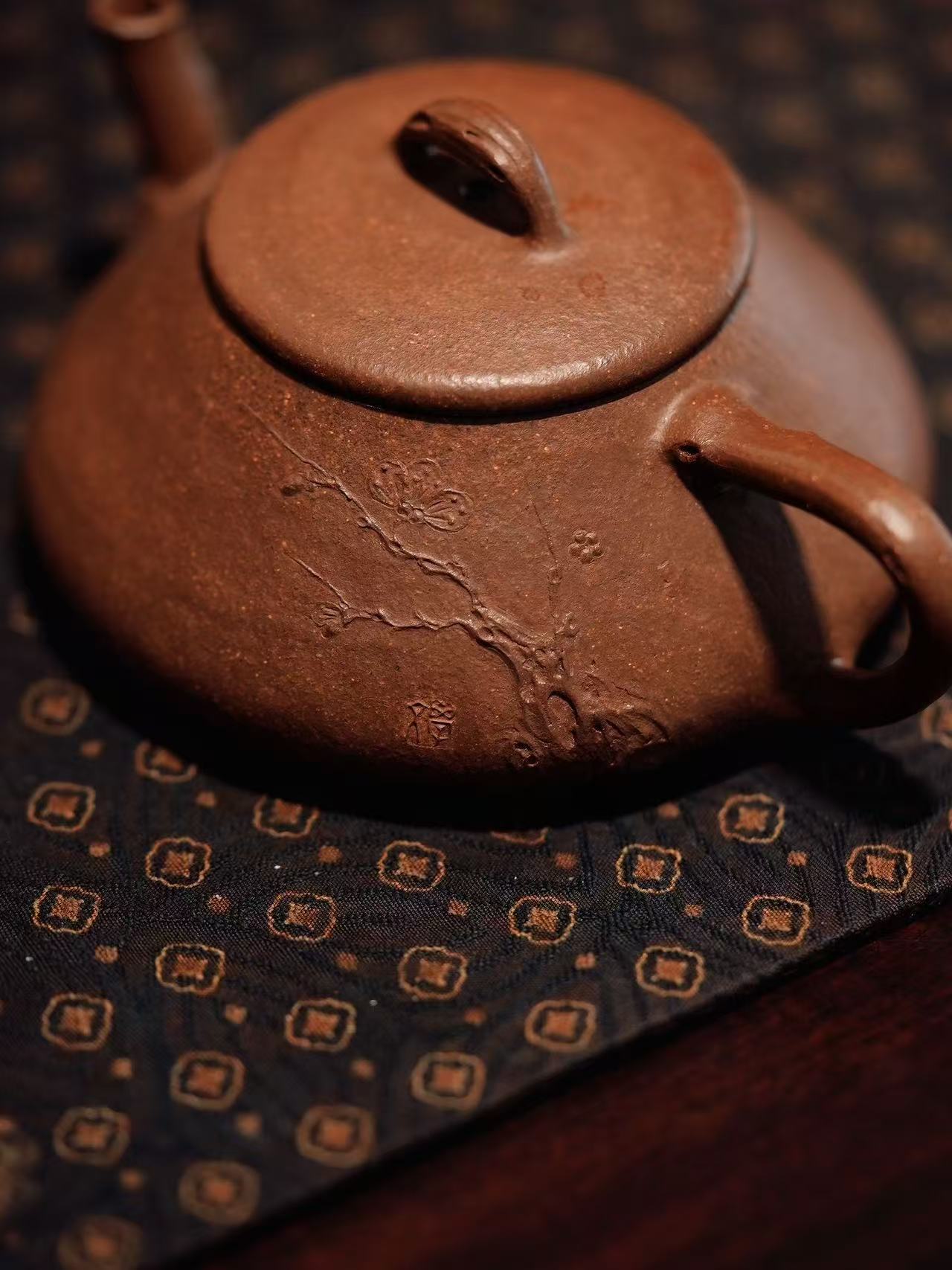
His forms are quiet and a little asymmetric, marked with an incised plum branch and a seal, in the wabi-sabi spirit of a thing made true rather than perfect. We describe what the pots are, and what they are is honest: built slowly, fired once, finished by chance.
See “The Fisherman” & its film →